Chandler, Arizona
Electronics & Computer Recycling in Chandler
We arrange electronics and computer recycling in Chandler for businesses retiring computers, servers and other technology. A planned retirement can bring collection, data handling and disposition into one project, rather than treating removal as the only decision. We also provide residents with drop-off instructions for eligible personal electronics on request. The right route depends on the equipment and whether it is being retired by a business or brought in for residential drop-off.
- Business pickup
- Residential drop-off information
- Data destruction and ITAD
- Phoenix metro service
Business pickup
Scheduled collection for offices, storage areas, and recurring equipment retirement.
IT asset disposition
Inventory review, data handling, reuse assessment, and final records.
Secure data destruction
Sanitization or physical destruction matched to each type of media.
Residential drop-off
Free drop-off for eligible personal electronics, with no appointment needed.
Retire equipment with its intended outcome in view
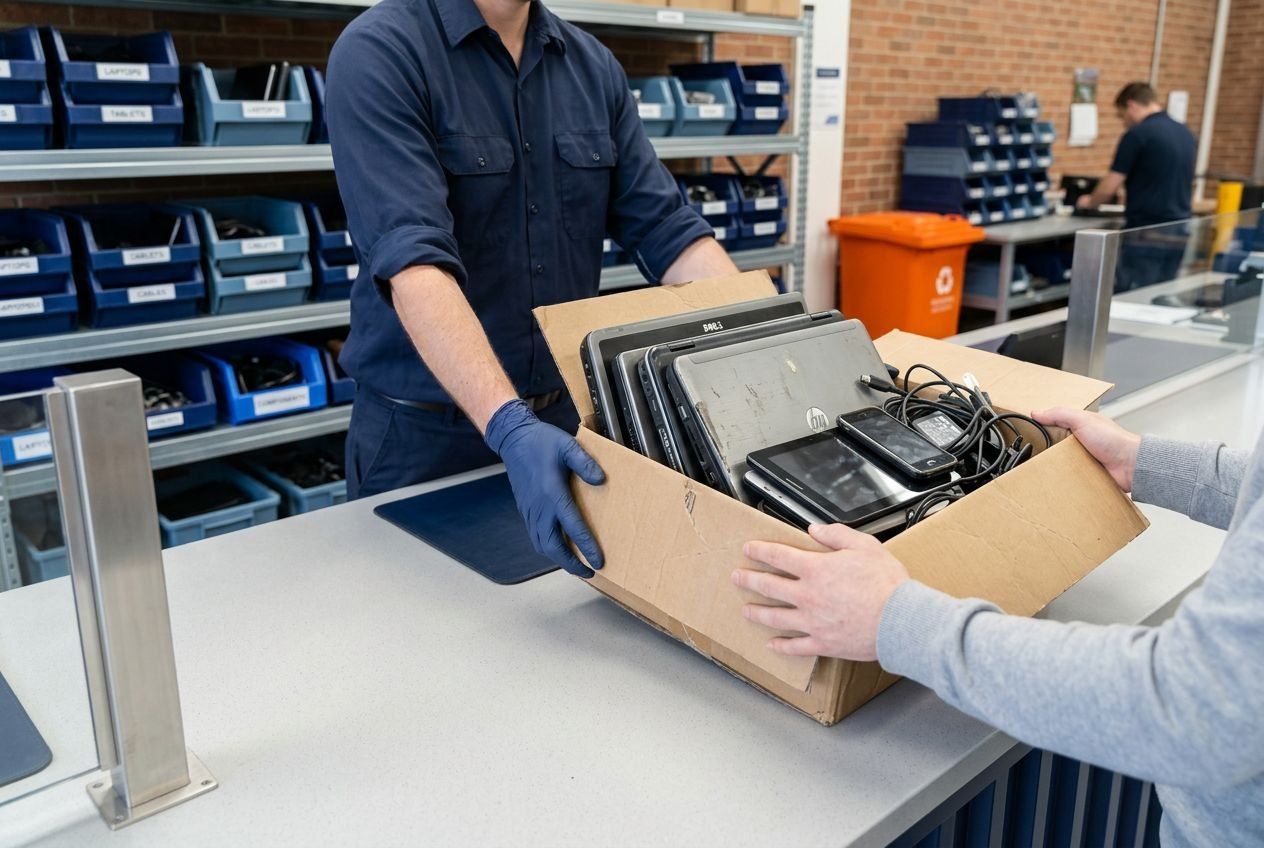
A technology refresh can leave more than replaced laptops behind. Desktops, servers, tablets, phones, peripherals and flat-screen computer monitors are accepted equipment categories. Printers, scanners, fax machines and stand-alone copiers may be subject to fees based on size, so they should be scoped separately from standard computer equipment.
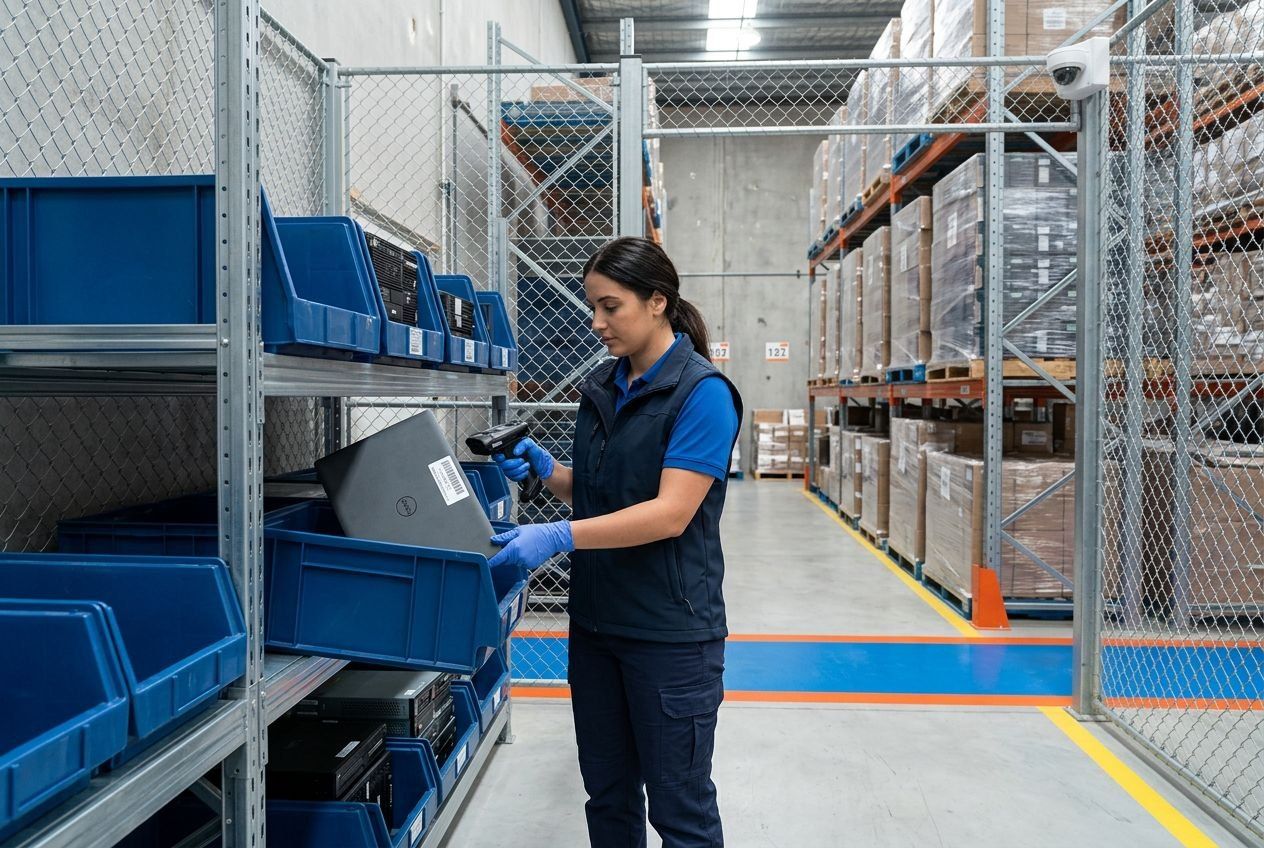
We help bring equipment retirement into focus by distinguishing items for recycling from devices that may have reuse value. Equipment can be assessed for refurbishment or remarketing after appropriate data handling. Its age or appearance alone does not determine its disposition, and a resale credit should not be counted on before assessment. That distinction helps your team match each group of assets to its intended outcome and keep active equipment out of a retirement load.
Equipment checklist
What goes in an electronics load
May carry size-based fees
- Printers
- Scanners
- Fax machines
- Stand-alone copiers
Keep out of the load
- General trash
- Household appliances
- Chemicals
- Hazardous or contaminated medical equipment
- Automotive batteries
Ask first
Computer monitor acceptance does not cover televisions or CRT displays by default. List them in your request.
Bring collection and retirement into one plan
A business cleanout may involve one equipment closet, a staged office refresh or recurring collections. We help shape the request around the volume and the outcomes your organization needs. For Electronics Recycling Phoenix, that means connecting equipment removal with the relevant recycling, data and asset-retirement services rather than treating each as an unrelated task.
eWasteGo fulfills the work. Its services include business collection, electronics recycling, IT asset disposition and data destruction. Accepted categories include computers, servers, tablets, phones, peripherals and flat-screen computer monitors. Its asset-retirement services can include inventory review, asset labels, tracked transportation, data processing and final inventory or reporting. The specific scope and records are set for the project. This gives your organization a clearer path from equipment leaving use to its documented disposition.
ITAD goes beyond removal
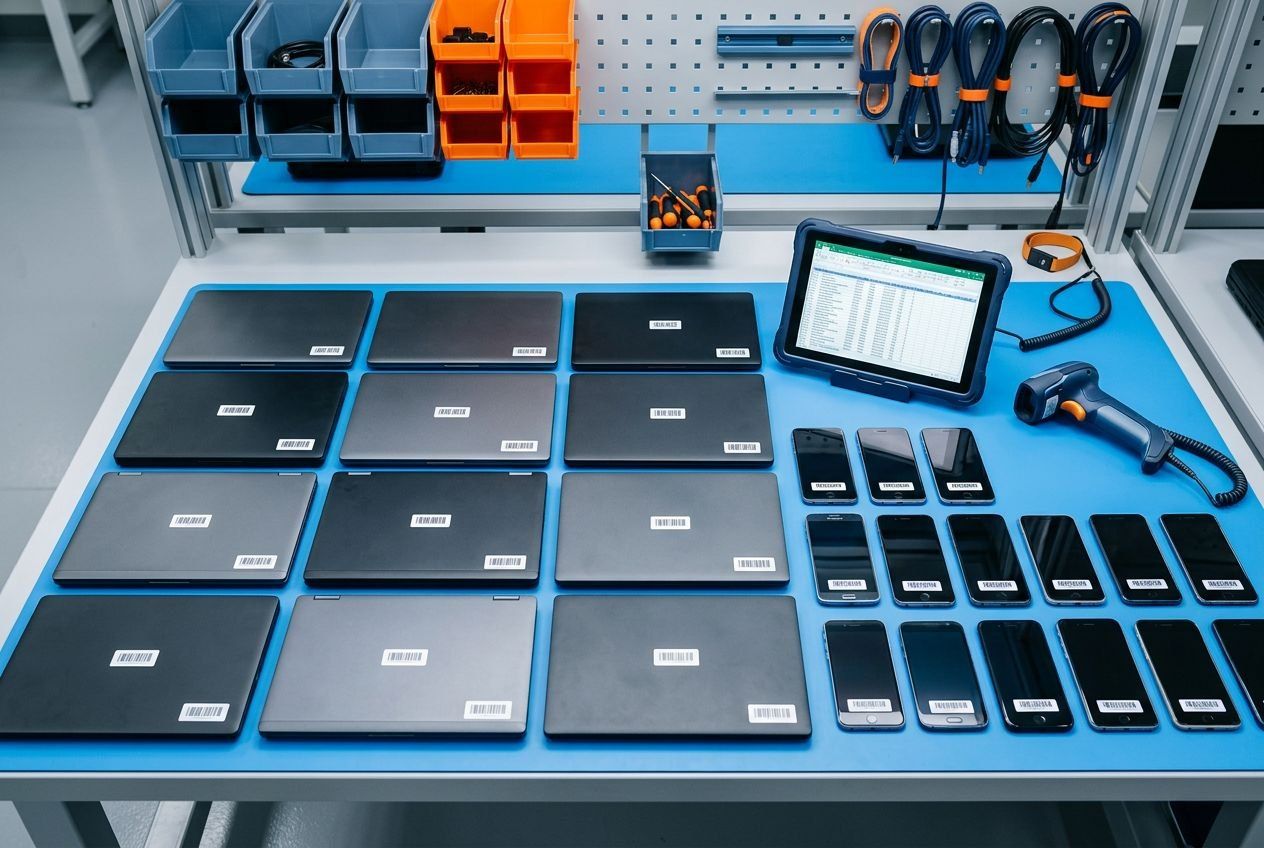
Recycling addresses what happens to equipment at the end of its useful life. IT asset disposition (ITAD) adds assessment, data handling and records to the retirement process. It can help your team reconcile devices against an internal asset register, distinguish active equipment from obsolete assets and track different outcomes across a refresh. A documented retirement path can include inventory review and serial-level reconciliation where required.
ITAD can also assess whether equipment may be suitable for refurbishment or remarketing after data treatment. The provider describes final inventory and reporting, including settlement-ready records and certificates of destruction for data-bearing devices when applicable. These outputs depend on the agreed project scope. Reuse value and proceeds are not assured, and not every device will qualify. Separating assets by intended outcome helps your organization keep resale assessment distinct from recycling or authorized destruction.
How a request works
From your first message to a finished retirement
- 01
Describe the equipment
Send the device types, rough quantities, and location through the form or by phone.
- 02
Confirm scope and charges
Availability, the accepted load, and any applicable charges are agreed before anything is scheduled.
- 03
Pickup or drop-off
Businesses get a collection planned around access and loading. Residents get current drop-off instructions.
- 04
Data and records
Data treatment and documentation follow the outcome you requested for each device.
Choose data handling for the device
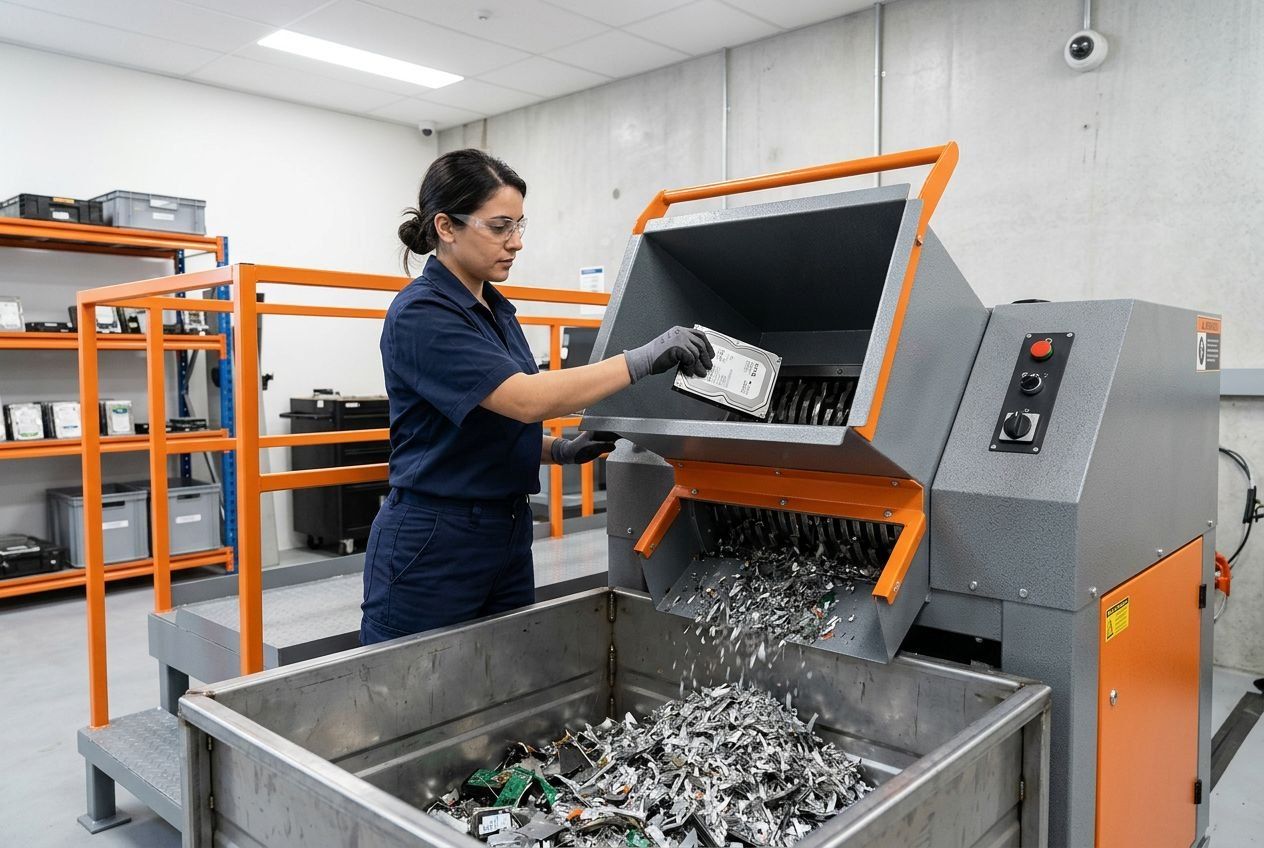
Removing a computer does not address the information stored on it. We help include data handling in the retirement plan, so the requested outcome for a device or its media is clear. Options can include software-based overwriting, degaussing where appropriate, or physical destruction. The method depends on the media and its intended next use.
Sanitization and physical destruction serve different purposes. Equipment being considered for reuse needs a different treatment decision from a drive authorized for destruction. Secure data destruction can include records of data handling when documentation is part of the agreed work. On-site and in-facility options are available through the provider. The service scope identifies the selected method and applicable records, so your team can align information handling with the asset’s disposition instead of treating hardware removal as proof that data has been addressed.
Plan a collection around the site
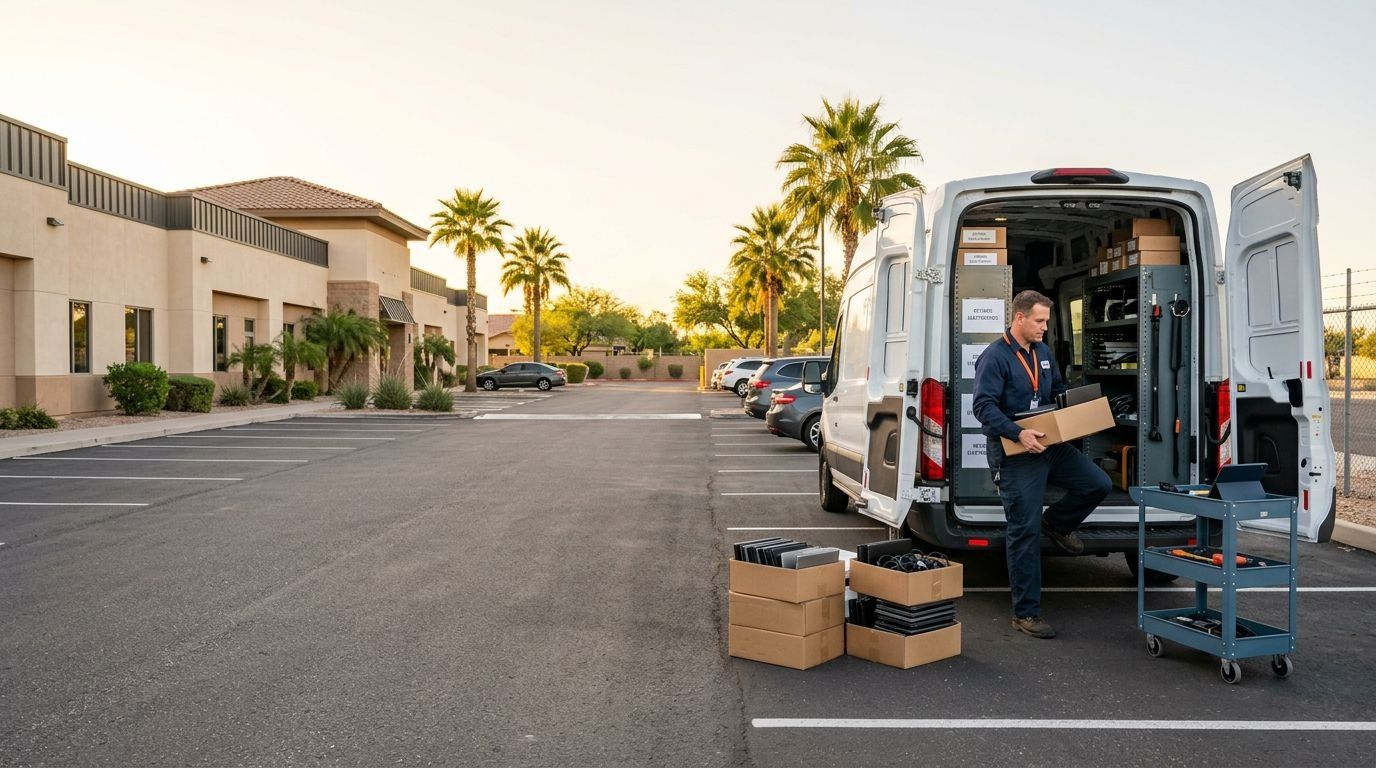
Business collection involves both the equipment and the conditions for removing it. We help plan the work around your site based on volume, access and loading needs. Dock-high access, a liftgate or a box truck may suit a particular project, but logistics depend on the address and collection scope. Your team can discuss those details as part of a Chandler business pickup request.
A collection plan should also separate standard computer equipment from items that need additional review, such as larger copiers. Applicable fees, accepted items and scheduling are established for the specific project. Single-site cleanouts and recurring programs can both be discussed, with the collection arranged around the operation rather than a presumed route or fixed schedule. This makes it easier to connect equipment removal with the asset and data services required for the retirement.
Handle multiple locations and residential drop-off
When a retirement project includes a Tempe address, we can discuss a separate office address alongside the Chandler scope. A Mesa site may also be part of another operating location. Each address can have its own equipment, access and loading requirements, so the locations should be planned as parts of the project without assuming they share the same conditions.
Residents have a separate option for eligible personal electronics: drop-off, with instructions provided on request. eWasteGo lists free residential drop-off with no appointment or minimum quantity. Residential drop-off is not home pickup, and employer-owned equipment at a residence should be discussed as business equipment rather than presumed eligible for the residential route. This keeps household drop-off distinct from a commercial asset-retirement project.
Service request
Request Chandler electronics recycling
Call (623) 500-3674 to discuss Chandler computer recycling, business collection, ITAD or data destruction. Tell us what equipment is being retired and the outcome you need, and we’ll connect your request with the appropriate eWasteGo service.
Tell us about the equipment
Pickup availability, scope, and scheduling are confirmed before a collection is booked.